In Quentin Tarantino’s Once Upon a Time in Hollywood, Rick Dalton is more than a fading star of the studio era. He is a man in crisis, caught by an industry that has moved on without him. Played by Leonardo DiCaprio, his situation is an unusually clear case study in personal branding — what happens when you never built one.
1. Legend and reality
Rick is genuinely talented and was genuinely famous, on the strength of successful television. New faces and new expectations have arrived, and he now gets offered exactly the kind of role that once made him a star and now signals his decline. Holding on to a star identity while being pushed toward the margins is where his branding problem begins.
The film is precise about the mechanism. Rick is being cast as the villain who loses to the young lead — which is not a demotion in status so much as a repositioning of what he means to an audience. Every one of those roles teaches viewers to read him as the man who gets beaten, and after enough of them the reading is permanent.
2. Reinventing yourself in a shifting industry
In Hollywood, image matters as much as ability. Like a lot of professionals, Rick has never thought about his own brand: he rests on old successes instead of building an identity that could keep him competitive.
Staying relevant means a brand that changes over time. The questions are not complicated:
- What are my actual strengths and values now?
- How could I position myself differently in a market that has changed?
- What makes me distinctive beyond what I did before?
For Rick, answering them means leaving his comfort zone and accepting that his value is not the roles he used to get.
What makes the film honest is that Rick is not lazy. He works hard, he cares about the craft, and there is a scene where he berates himself for forgetting lines that shows exactly how much it matters to him. Effort was never his problem. Direction was.
3. Avoiding the career-decline trap
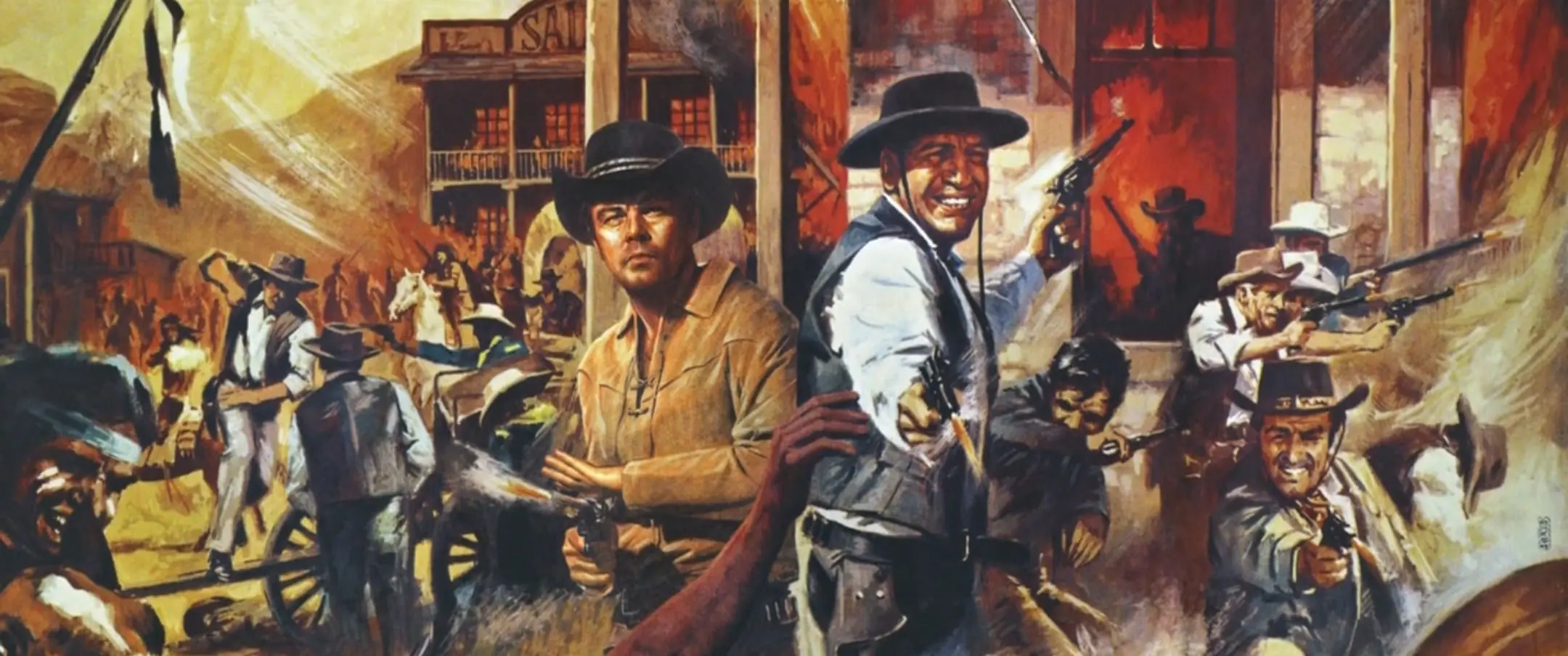
Meeting the Italian director Sergio Corbucci is the turning point. Rick is reluctant to appear in a «spaghetti western», and that reluctance is the point: taking the role means stepping outside the narrow frame of Hollywood expectations.
Career transitions are destabilising and they are how brands get renewed. Most professionals face the same choice at some point — an unusual project that broadens what you can do. This is where personal branding stops being self-presentation and becomes evidence that you can evolve.
Notice the status anxiety attached. Rick treats Italian westerns as beneath him, and that judgement is inherited from an industry hierarchy that is already collapsing. Refusing work because of where it sits in an old ranking is one of the most reliable ways to become obsolete.
4. Cliff Booth and consistency
Cliff, Rick’s stunt double and friend, is unwavering. That matters more than it looks. A network of people who know your values and stay anyway gives you both an emotional anchor and credibility.
Consistency — in values, in relationships — is a large part of what a personal brand actually is: proof that you stay who you said you were regardless of circumstances.
The relationship also does something less comfortable. Cliff’s loyalty is partly professional dependence, and the film never fully separates the two. Most real professional relationships have that ambiguity, and pretending otherwise is what makes networking advice ring false.
5. Resilience
Rick’s real lesson is that accepting change is not optional. Only by tolerating uncertainty, trying new things and adjusting his image does he get through the crisis. Bouncing back after disappointment strengthens a brand more than an unbroken record would; his refusal to disappear is what makes the character compelling.
The scene where an eight-year-old co-star tells him he gave the best performance she has ever seen is the film’s emotional centre for a reason. Recognition arrived from the least prestigious possible source, and he takes it — which is what resilience looks like when it is not performing for anyone.
6. What the audacity buys
At the end, an unexpected opportunity arrives — and it arrives because of the path he took. Allowing himself to be vulnerable and to move into unfamiliar territory is what opens the door.
Rick Dalton argues for a personal brand built on authenticity and persistence: success is not the first triumph, it is the ability to reinvent yourself without pretending to be someone else.
Language notes
Period American dialogue with long conversational scenes — good listening practice at advanced level, and a strong source of professional and media vocabulary. Tarantino writes speech that runs longer than most screenwriters allow, which is unusually good for a learner: you get sustained natural rhythm rather than clipped exchanges.
Be aware the film contains a lot of 1960s industry jargon. You do not need to catch all of it; the emotional content is legible without it.
Expressions worth collecting:
- «Washed up» — finished, past your best; the phrase Rick most fears being applied to him
- «Has-been» — a noun for someone formerly successful; note the hyphen and the fixed form
- «Typecast» — repeatedly given the same kind of role; used well beyond acting, for anyone stuck in one professional identity
- «Back in the saddle» — returned to work or activity after an absence; a western idiom that survives in general business English