
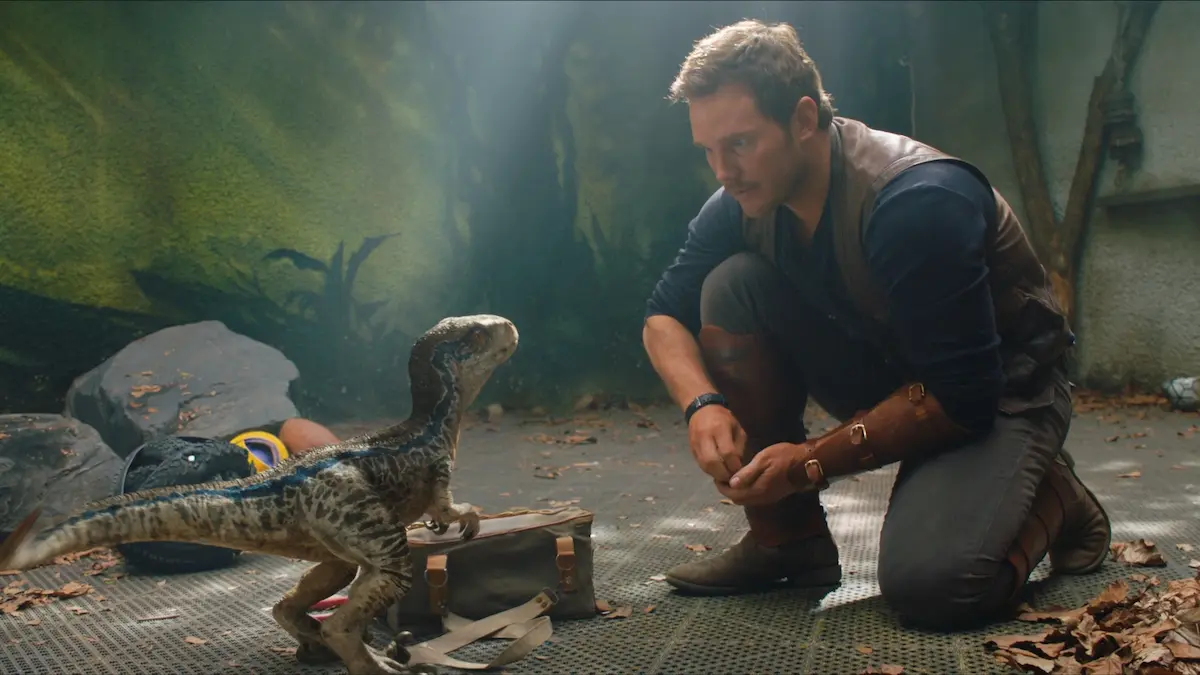
Jurassic World: Fallen Kingdom is a dinosaur adventure that spends a surprising amount of its running time on things that worry people in reality: genetic engineering, climate breakdown, and who is responsible when science is put to work by someone else’s balance sheet.
The franchise has always been about this. Michael Crichton’s original novel was a warning about biotechnology written at the moment commercial genetic engineering became plausible, and every sequel has been arguing with that warning since. What changes is which anxiety is most current.
Genetic engineering and a failing ethics
The film’s central theme is genetic manipulation, dramatised through hybrid dinosaurs like the Indoraptor. That manipulation raises real questions about the limits of science and the unpredictable consequences of engineering living things.
With CRISPR, genetic modification is no longer speculative, and the questions about ethics and scientific responsibility are live. The film’s argument is not that science should stop, but that capability without an ethical framework is the actual hazard. It keeps its attention on unintended consequences — for modified animals, and by extension for humans.
The Indoraptor makes the point more sharply than its predecessor did. It is not an accident or an escaped experiment; it was designed to specification, as a weapon, for a buyer. The danger in this film is not that scientists went too far by curiosity but that they were commissioned.
Climate and the protection of species
The dinosaurs face extinction from a volcanic eruption, and the situation maps directly onto the challenges of climate breakdown. The need to save these creatures echoes the present environmental crisis and the effort going into protecting endangered species.
The film uses the threat of extinction as a metaphor for our responsibility toward the planet. The debate about saving the dinosaurs mirrors real arguments about conservation and about how human activity has pushed so many forms of life to the edge.
Its sharpest question is also its most specific: do we have a duty toward creatures we ourselves brought back? That is a fair allegory for our relationship with a natural world we have already altered.
The scene of a brachiosaurus left on the dock as the island burns is the film’s most effective moment, and it works because it refuses to resolve. The characters have decided who gets saved, and the film makes you watch the consequence of the decision rather than the decision itself.
Capitalism and the exploitation of science
The other major theme is commercialisation. In the film, dinosaurs are captured to be auctioned or used as weapons — scientific discovery turned to profit, and diverted from any purpose the researchers intended.
The critique is that research can end up steered by financial interests rather than ethical or humanitarian concerns, which is not a hypothetical problem. The film warns about the consequences of letting funding decide what gets developed, and it is the most durable part of its argument.
The auction sequence is the clearest statement in the franchise. Living animals brought back at enormous scientific cost are sold, in a basement, by the lot, to buyers who want them for exactly one thing. Every stage of the process was legal somewhere.
The ethics of responsibility
At its centre sits the question of human responsibility. The actions of the scientists and the entrepreneurs have consequences far wider than anyone anticipated, and the characters have to decide whether the dinosaurs deserve a second chance at existence.
That is a metaphor for thinking about the consequences of what we do, particularly in science and in the environment. The same question runs through contemporary debate about climate, biodiversity and the impact of new technologies, and the film’s contribution is to make an audience sit with it for two hours.
What Fallen Kingdom ultimately argues is that the real question is not whether science can do something, but whether it should.
Three scenes worth rewatching
The opening dive. A sequence about people retrieving something they should have left where it was — the whole series in five minutes.
The auction. Watch the buyers rather than the animals. The film is telling you who this technology is actually for.
The final decision. A choice made by a character with no authority to make it, and the film declines to say whether it was right.
Language notes
Clear dialogue with a useful set of scientific and environmental vocabulary, and a plot easy enough to follow that you can concentrate on the language. Suitable from intermediate level.
This is a good film for building topical vocabulary you will meet in the news: extinction, habitat, genome, ethics, auction, ecosystem. Blockbusters generally have simpler dialogue than the subject would suggest, and this one explains its own terminology as it goes.
Expressions worth collecting:
- «Play God» — to take decisions over life and death that arguably should not be anyone’s to take
- «Open Pandora’s box» — to start something whose consequences cannot be controlled
- «Cross the line» — to go beyond what is acceptable
- «At any cost» — regardless of the consequences; note the fixed preposition