
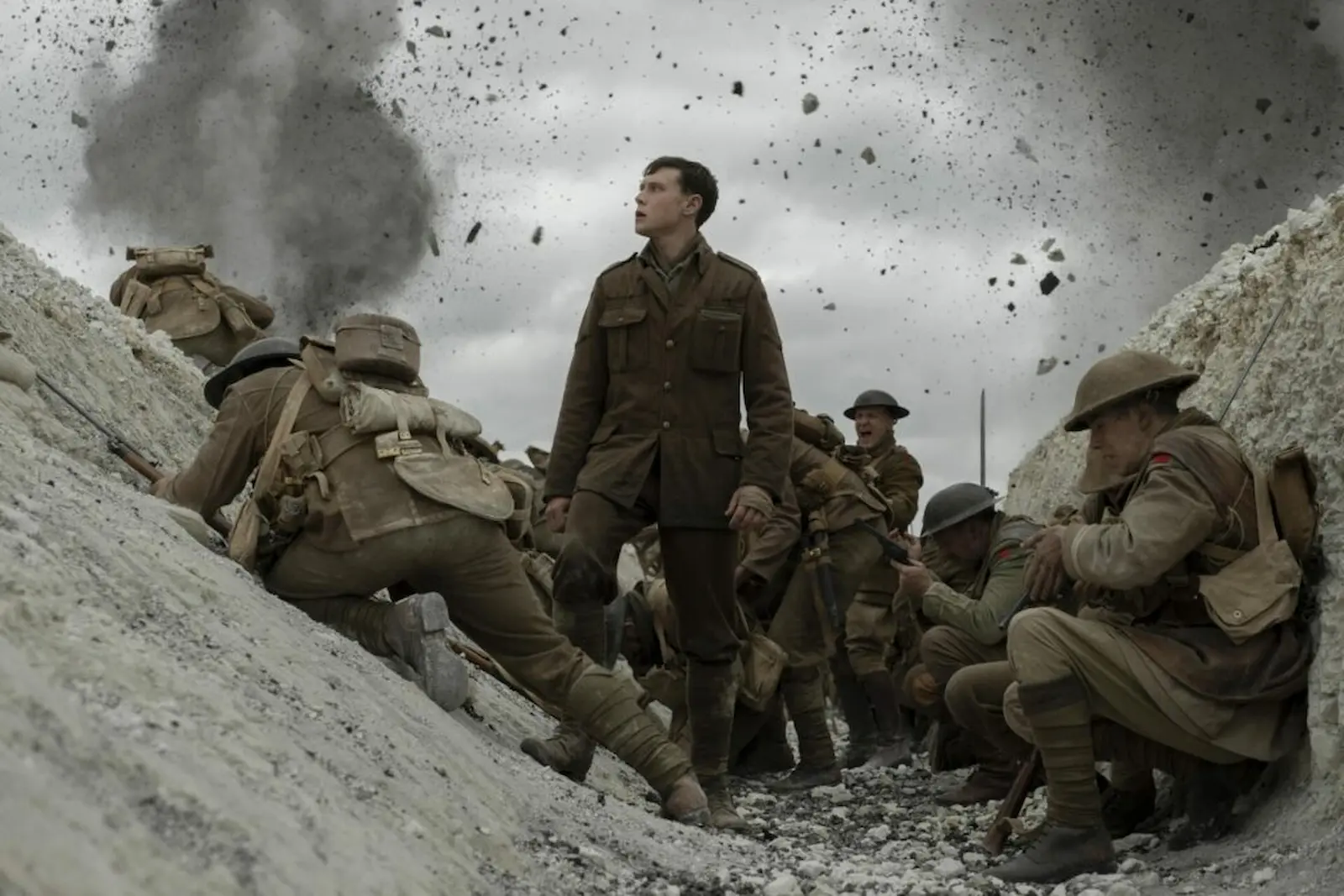
Teamwork is the most discussed and least examined subject in corporate life. 1917, directed by Sam Mendes, offers an unusually clear view of it, because in a war film the consequences of getting it wrong arrive immediately and cannot be argued with.
The film’s famous continuous-take construction matters here beyond the technical achievement. Because there are no cuts to hide behind, you watch decisions accumulate in real time — which is exactly how team failures actually happen, rather than in the single dramatic moment a conventional edit would isolate.
What teamwork actually consists of
- Complementary skills. Different people bring different capabilities, and what works is the combination rather than any individual strength.
- Cohesion between people who may have nothing else in common — and who did not choose each other.
- Shared objectives clear enough to act on without checking back.
None of the three is sufficient alone, and how each manifests depends entirely on the organisation. A team with complementary skills and no cohesion produces internal competition. A cohesive team with no clear objective produces pleasant meetings. The combination is what produces work.
Why war is a reasonable analogy
Every skill has its use and completes the others: strategy, combat, weapons handling, carrying a message. Survival depends on the combination, not on anyone being exceptional. That is a genuinely uncomfortable idea in professional environments built around individual performance measurement.
Cohesion works the same way. In combat it has to cut across hierarchy: a form of collective survival in which rank matters less than mutual trust. In a company, the equivalent is people helping each other because they share an objective, not because an organisational chart says they report to the same person.
The film makes this concrete in a way a business case study cannot. Blake and Schofield are not friends by selection — they are two men assigned to the same task, and the trust between them has to be constructed while they work.
The worst case: losing someone essential
Blake and Schofield have to warn a battalion of an ambush. Blake dies halfway.
The loss is emotional and structural at once: it puts the mission at risk. Anyone who has watched a team lose the person who was holding a project together will recognise the shape of it. Redundancy is unattractive, and its absence only becomes visible afterwards.
What the film does well is refuse to make the recovery heroic. Schofield does not become suddenly capable of two people’s work. He carries on diminished, and the mission is worse off for the rest of its duration — which is what actually happens when a team loses its keystone.
The best case: mutual support
Earlier, Schofield is trapped under rubble when a mine collapses. Blake pulls him out.
That is the version of teamwork that appears in no performance review: the moment someone drops what they are doing because a colleague cannot continue alone. It is also the reason the mission progresses at all.
The two scenes are deliberately paired. The film gives you the rescue before the loss, so that when Blake dies you already understand precisely what has been removed. That is the argument for investing in the relationships before you need them.
A clear objective, and the willingness to listen
The mission is precise: warn the second battalion that the attack is a trap. General Erinmore states it once, and that governs everything the two men do afterwards. Vague objectives produce vague work; this one does not.
Notice how little supervision follows. The order is given, the objective is unambiguous, and the two men are then trusted to solve every problem between the trench and the destination. That combination — high clarity on the what, complete latitude on the how — is what most organisations claim to want and rarely manage.
The film ends in listening. Schofield reaches General Mackenzie, who calls off the attack and saves 1,600 men. Mackenzie does not want to hear it. He hears it anyway.
In a company the stakes are lower, but the mechanism is identical: the cost of not listening to the person who has information you lack is paid later, and it is paid by everyone. Mackenzie’s willingness to be interrupted is the single most consequential act of leadership in the film, and it takes about ninety seconds.
Three scenes worth rewatching
The abandoned farmhouse. The moment of calm before the film’s turning point, and a lesson in how tension is built by removing threat rather than adding it.
The night sequence in Écoust. Flares, ruins, and almost no dialogue. Watch how much information is transmitted without language — useful practice for reading a situation before you have the words for it.
The final run across the line. A man moving perpendicular to an entire advancing army: the film’s whole argument about individual agency, in one image.
Language notes
Dialogue is sparse and the accents are regional British — demanding for the ear, and excellent practice once you are past beginner level. If you are working on distinguishing British varieties, this film is a good laboratory: you get received pronunciation from the officers and a range of regional voices from the ranks, often in the same scene.
Expressions worth collecting:
- «Down the line» — along the front, but also, in general use, «later on» or «further along in the process»
- «Get a move on» — hurry up; direct, informal, and common in spoken British English
- «No man’s land» — the ground between two trenches, now used for any contested or unowned space, including in business
- «Hold the line» — militarily, maintain position; in ordinary speech, refuse to give ground in a negotiation