
Fast & Furious Presents: Hobbs & Shaw is built out of stunts, and underneath them it works on three fairly universal subjects: resilience, collaboration, and what family is actually for. Here is how the film uses its two leads to make those arguments.
The premise is a spin-off, which matters more than it sounds. Both men were introduced as antagonists in earlier films, and putting them together means the film starts with two characters who have genuine reasons to dislike each other rather than manufactured friction.
The incompatible team
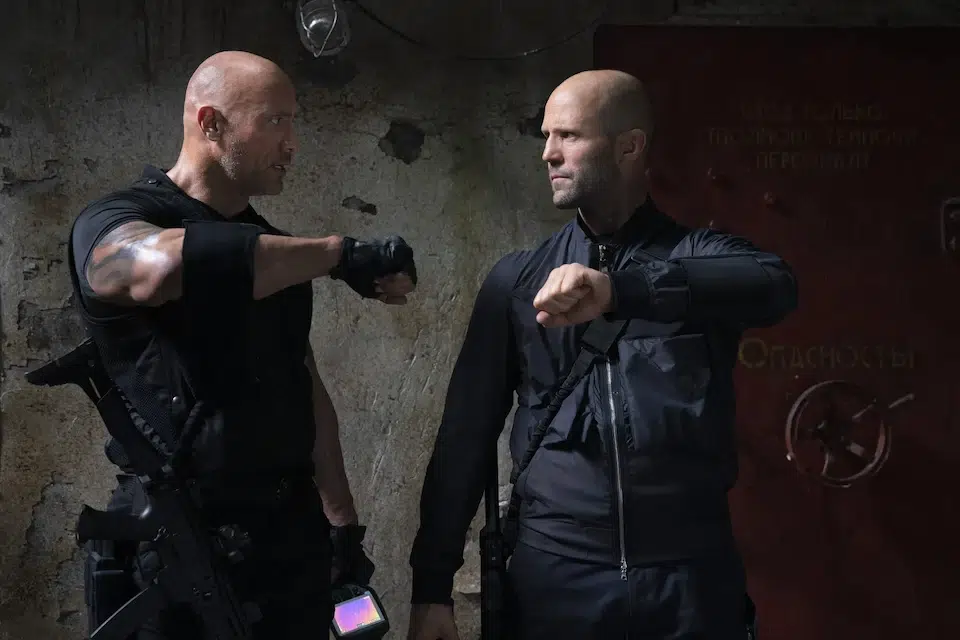
Luke Hobbs and Deckard Shaw are complete opposites. Hobbs is a law-enforcement agent operating on brute force; Shaw is a former MI6 operative, refined and tactical. Their incompatibility is obvious, and they have to work together anyway against a shared threat.
The improbable partnership is a strong metaphor for collaboration across genuine differences. The film argues that real strength lies in the ability to work together despite them. The scenes where the two are forced to coordinate — usually played for laughs — make a serious point: resilience includes the ability to set aside your ego and rely on your partner’s skills. Teamwork is what makes the difficult objective possible.
The film is honest that the friction never fully resolves. They do not become friends who agree; they become colleagues who have established what each is good at. That is a more useful model for most working relationships than the version where everyone ends up liking each other.
Adversity as a source of strength
Resilience is the film’s central theme. Hobbs has to confront a complicated family history; Shaw is trying to restore his family’s honour after past mistakes. Both demonstrate that getting past personal difficulty is what allows anything else to happen.
The film’s position is that obstacles are not only impediments — they are where growth comes from. The action scenes push both characters past their physical and mental limits, and their constant need to adapt to unpredictable situations is what resilience looks like when it is dramatised.
The message generalises: adapt, persist, and use adversity as a source of strength rather than a reason to stop.
Brixton, the antagonist, is the argument’s necessary counterweight. He has been physically enhanced past human limits and describes himself as the future, and he loses to two men with nothing but persistence and a working relationship. The film is explicit that upgraded capability does not substitute for the thing the two of them have.
Family as the foundation
Family runs through the whole film. For Hobbs, returning to his Samoan roots and facing the brother he has been in conflict with for years is the biggest step in his personal development. The strength he finds in his family and his origins is what gets him through the hardest parts.
For Shaw, the relationship with his sister Hattie is equally central — a constant reminder of his past and of what he owes. The film’s argument is that family relationships can be complicated and still be the main source of motivation and resilience. Leaning on them is where both characters find what they need.
The Samoan act does something the franchise rarely attempts: it slows down. The final sequence works because the film has spent time establishing a place and a set of obligations, so that the defence of it means something beyond spectacle.
The action as metaphor
The action sequences are not only demonstrations of physical capability. They stand in for the characters’ mental resilience: facing enemies who are stronger, or committing to a pursuit that should not work, Hobbs and Shaw simply do not stop.
Those physical tests represent the internal battles everyone fights in ordinary life. The willingness to get up after each fall and keep going despite the damage is the film’s clearest statement, and the action becomes a visual representation of that.
What Hobbs & Shaw ends up saying is that life’s challenges are not met alone. Collaboration, adaptability and family are the actual engines of resilience.
Three scenes worth rewatching
The split-screen introduction. Two morning routines side by side. The film characterises both leads completely before either speaks to the other.
The interrogation room. Two men insulting each other for several minutes. It is the best-written scene in the film and establishes the entire dynamic.
The final defence. A family fighting with improvised weapons on their own ground. The contrast with the enhanced soldier is the film’s thesis, staged.
Language notes
Dwayne Johnson’s American against Jason Statham’s London English, plus Samoan and Scottish accents in the supporting cast. Excellent accent practice at intermediate to advanced level.
The film is one of the more efficient ways to hear American and British English placed directly against each other. The insult exchanges are written specifically to contrast the two vocabularies, so you hear the same idea expressed in both varieties within seconds — which is exactly the comparison a learner needs and rarely gets.
Expressions worth collecting:
- «Bring it on» — an invitation to a challenge or a fight; entirely standard outside violent contexts too
- «Have it out with someone» — to confront someone directly about a long-standing disagreement
- «Blood is thicker than water» — family loyalty outweighs other obligations
- «Watch your back» — be careful; also, as «I’ve got your back», an offer of protection