
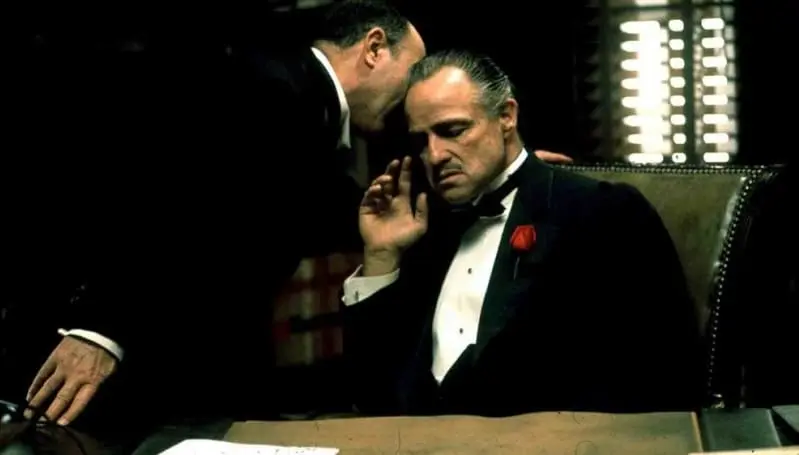
In The Godfather, Don Vito Corleone is a strategist before he is anything else. The character is both ruthless and unusually attentive to people, and that combination is what makes his negotiating method worth examining — with the obvious caveat that the setting is criminal and the method is not.
Build trust before you need it
Vito’s first move is always relational. From the opening scene he is establishing connections, helping people who ask, and building a network of obligation and loyalty.
The business translation is unglamorous: durable relationships with partners, clients and colleagues. A network built on trust makes negotiations easier and generates opportunities that never appear on a pipeline.
The opening scene is worth studying closely. Bonasera asks for a favour, and Vito’s objection is not to the request but to the framing — the man came only when he needed something, having kept his distance for years. The lesson is about timing: a relationship built at the point of need is not a relationship, it is a transaction with extra steps.
Listen actively
Vito listens closely to what people want, which is how he understands what motivates them. When he meets Sollozzo, he listens carefully before deciding anything, and that lets him weigh the proposal properly.
In any negotiation, active listening is what surfaces the actual points of agreement and the actual sources of conflict — both of which are usually different from what was on the agenda.
Notice how little he says in that meeting relative to how much he learns. The ratio is the technique.
Be patient
He never rushes a decision. Refusing Sollozzo’s offer follows a full assessment of the situation rather than an instinct. Taking the time to work through options and prepare a considered response tends to produce better outcomes than speed.
Patience is also positional. The party under time pressure concedes more, and Vito never allows himself to be that party. Where a deadline is imposed on you, the first useful question is who set it and why.
Know how to say no
Vito can refuse firmly. Unlike people who negotiate to be liked, he understands that some offers should be turned down. Declining to enter the drug trade is a statement of principle, and it costs him.
In business, knowing your limits and refusing proposals that would damage your integrity — or your company’s — is part of the job, not a failure of the negotiation.
What is instructive is how he refuses. He does not attack the proposal or the man making it; he explains his position, cites his own interests, and leaves the relationship intact. A refusal that closes a door permanently is usually a badly delivered one.
Offer options
He regularly gives the other side a choice, which creates a sense of control. Negotiating with the other families, he presents alternatives so that nobody is backed into a corner.
Presenting several viable solutions rather than a single demand lets the other party act on their own judgement — and makes agreement considerably more likely. Someone who chooses between your options has still chosen, and people defend their own choices.
Persuasion first
Vito prefers persuasion to force and uses force sparingly, as a last resort. The business parallel is defending your interests firmly while keeping dialogue as the primary instrument. Escalation is available; it should stay expensive.
The famous line about an offer that cannot be refused is usually quoted as a threat, and in context it is closer to a statement about leverage: Vito arranges situations where the other party’s best available option is the one he wants. That is what preparation buys, and the threat is the part you resort to when the preparation has failed.
Stay calm
His composure under pressure is his most visible strength, and it is what earns respect from everyone around him. Staying calm is not a personality trait so much as the precondition for thinking clearly and deciding well.
The contrast with Sonny makes the argument. Sonny is braver, faster and more forceful, and his temper is what gets him killed. The film is explicit that the reactive negotiator loses.
Vito Corleone’s tactics reach well past the world he operates in. They put the weight on relationships, listening, patience and judgement — and they suggest that real power lies less in force than in understanding what the other person actually wants.
Language notes
Slow, deliberate delivery and some of the most quoted dialogue in cinema. Very accessible for intermediate learners; the Italian-American accents reward a second viewing.
Marlon Brando’s performance is a specific listening challenge — the voice is deliberately muffled — but the rest of the cast is clear, and the pacing throughout is generous. Untranslated Italian appears occasionally and is subtitled.
Expressions worth collecting:
- «An offer he can’t refuse» — now a fixed idiom in English for overwhelming leverage, well outside any criminal context
- «Go to the mattresses» — to prepare for a prolonged fight; occasionally used in business English for a drawn-out dispute
- «It’s not personal, it’s strictly business» — the standard English formula for separating a decision from a relationship
- «Keep your friends close and your enemies closer» — from the second film, and among the most quoted lines in the language