
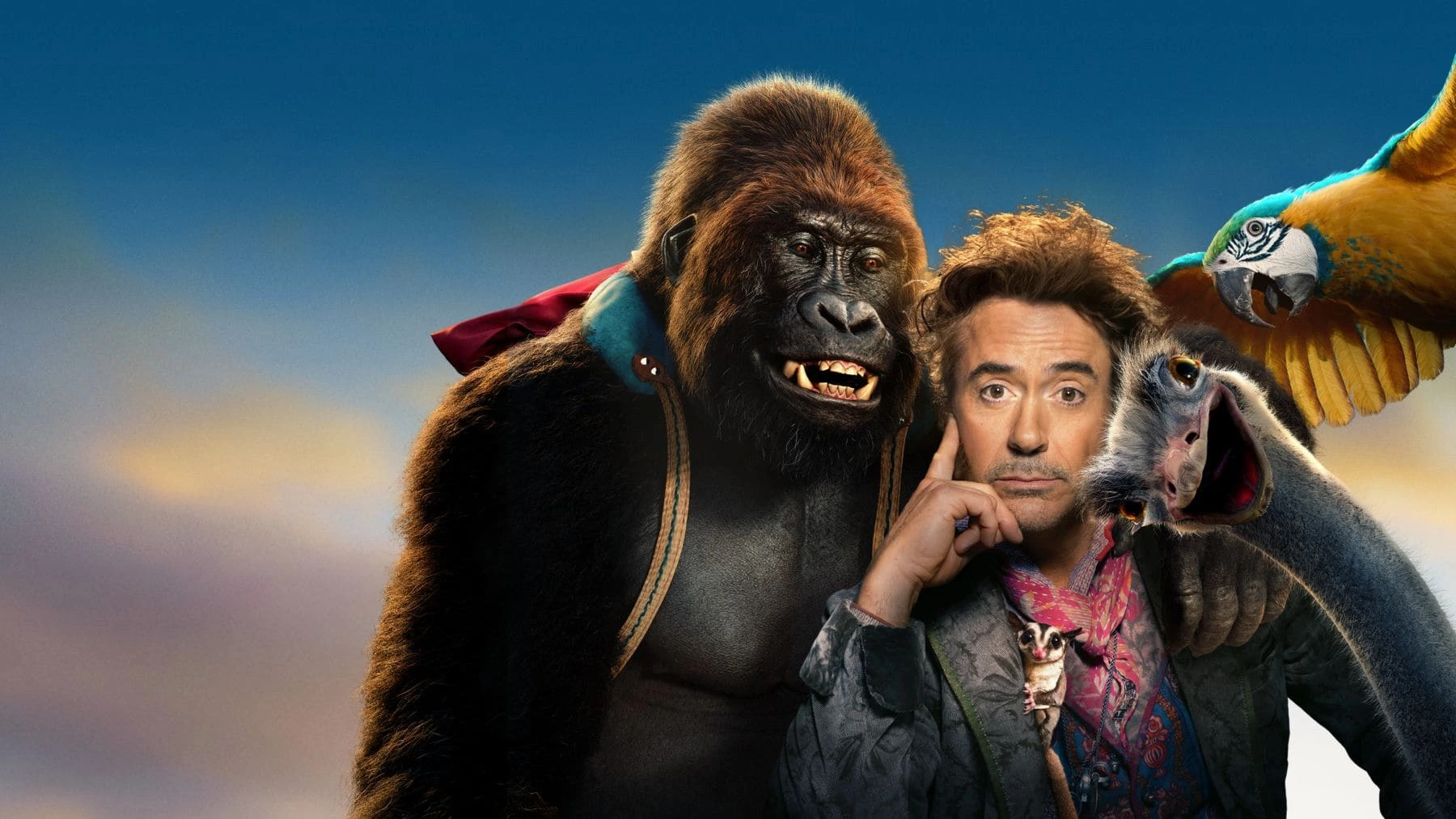
Dolittle sends its famous veterinarian out of the safety of his manor and into a genuinely risky voyage. The journey is full of obstacles that push him past his own limits, and the film is a straightforward illustration of what leaving a comfort zone actually produces.
It is worth being clear about the starting position. Dolittle is not simply comfortable at the beginning; he is hiding. He has withdrawn from human contact entirely after a loss, and the manor is not a home so much as a fortification. That distinction matters, because a comfort zone is rarely comfortable — it is usually just familiar.
The unknown as a catalyst
Forced to search for a cure to save the queen, Dolittle has to face the unknown. The voyage makes him confront his fears and discover capacities he did not know he had. Each stage tests his resilience and his ability to adapt.
Unforeseen danger and difficult decisions are what do the work: leaving your comfort zone builds an internal strength that cannot be developed while everything is predictable. Resilience is not an innate quality — it is a skill that develops when you are challenged and put in uncertain situations. New experiences are frightening, and that is generally why they produce growth.
Note that Dolittle does not choose to leave. He is forced out by circumstance, which is how it usually happens. Waiting to feel ready is the most common way of never going, and the film quietly acknowledges that most people need the decision taken out of their hands.
Learning to collaborate
After years of isolation, Dolittle has to work with other people. His travelling companions, human and animal, each bring a perspective and a set of skills that help him get past obstacles he could not have solved alone.
Leaving your comfort zone is not only about taking risks by yourself; it also means learning to trust others and work as a team. Dolittle discovers that support and cooperation make the difficult stretches survivable, which is a reminder that openness to collaboration is part of personal growth rather than an alternative to it.
The animals are written as a team with a genuine division of labour, and the film is better than it needed to be about this. Each one contributes something Dolittle cannot do himself, and none of them is decorative. For a family film, that is a reasonably sophisticated picture of how a working group functions.
Facing fear to rediscover yourself
Throughout the story, Dolittle confronts what he is afraid of: failure, losing the people he cares about, and returning to social life after years of seclusion.
Facing those fears is how he recovers his confidence and reconnects with parts of his personality he had abandoned. The unknown stops being a threat and becomes an opportunity to reinvent himself.
The principle generalises. Courage is not the absence of fear but the capacity to move forward despite it, and it is by testing our own limits that we actually grow.
The grief underneath is the reason the fear exists. Dolittle withdrew because he lost someone, and the isolation was a strategy for not losing anyone again. Understanding that is what makes his eventual return meaningful rather than merely cheerful.
What the adventure returns
Dolittle’s voyage is physical and internal at once. Every challenge and every encounter enriches his view of the world; he learns to open up to other people and to see his own life from a different angle.
Stepping outside familiar territory exposes you to new perspectives and widens what you can see. It reframes challenges as opportunities rather than obstacles, and it teaches adaptation and tolerance — things that are structurally unavailable to someone who stays where it is comfortable.
Dolittle makes the case plainly: the unknown is a vehicle for development and reinvention, and finding out what you are actually capable of requires going somewhere you have not been.
Three scenes worth rewatching
The overgrown manor. The opening establishes the character’s state without a word of explanation: a house consumed by the garden, and a man who has stopped cutting anything back.
The first departure. Watch how much of the resistance is bureaucratic and domestic rather than dramatic. Leaving is mostly a series of small refusals to leave.
The conversations with the animals. Each one is a different register, and the film uses them to show a man relearning how to talk to anybody at all.
Language notes
Robert Downey Jr.’s Welsh-inflected accent is an unusual challenge, but the vocabulary is simple and the story is easy to follow. A good option for beginners and lower-intermediate learners, and one of the rare titles that works for families.
The accent deserves a warning and a defence. It is idiosyncratic and was widely criticised, and it is genuinely harder to parse than standard British English. But the supporting cast — Michael Sheen, Emma Thompson, Antonio Banderas — offers a wide range of clear voices, so you are never left with only one accent to decode.
Expressions worth collecting:
- «Comfort zone» — the familiar situation where you feel no pressure; the phrase the whole article turns on
- «Step out of» — to leave a place or a situation deliberately; almost always paired with «comfort zone»
- «Come out of one’s shell» — to become more sociable after a period of withdrawal
- «Set sail» — to begin a voyage; used figuratively for starting any ambitious undertaking